
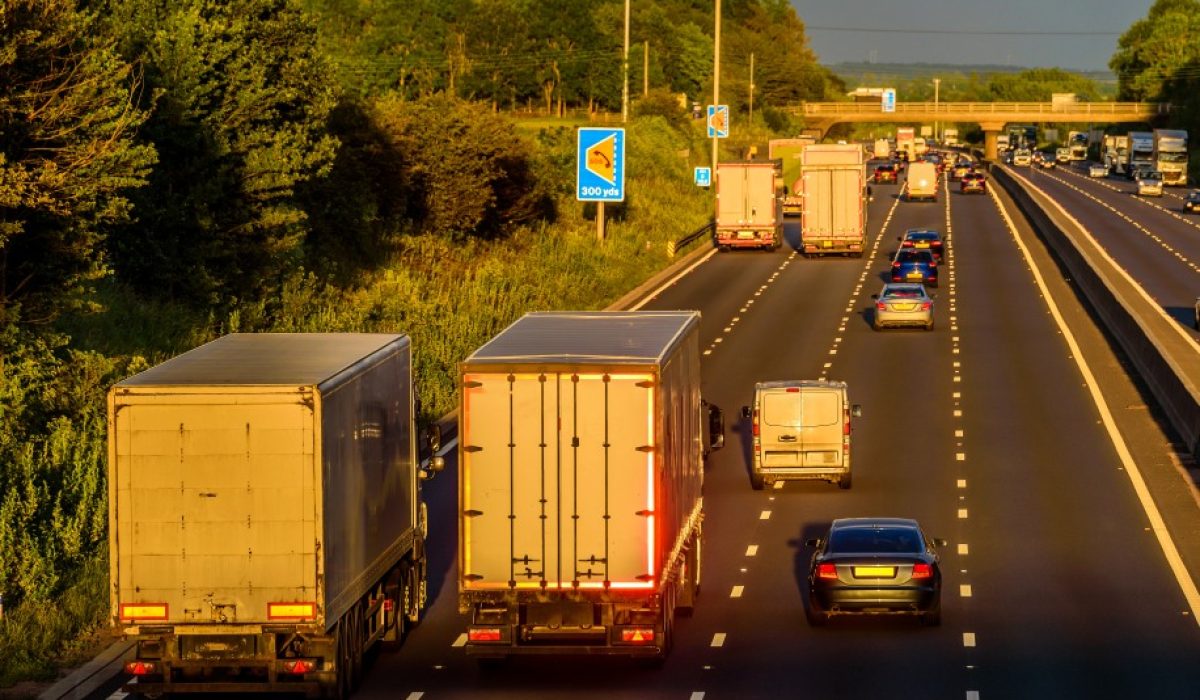
The UK’s motorway network is the backbone of British trade, with millions of tonnes of freight traversing critical arteries like the M1, M6, M25, and M62 every single day. Yet for manufacturers and distributors, keeping goods moving across these heavily congested corridors has become an uphill battle. When standard haulage stalls, UK pallet networks step in as masters of the motorway, leveraging collaborative logistics to bypass regional bottlenecks and keep nationwide supply chains moving securely.
If your business is still booking dedicated, half-empty heavy goods vehicles (HGVs) to move regional freight, you are essentially paying to transport empty air.
To build a resilient supply chain, UK businesses are shifting away from rigid, single-truck haulage and turning to the efficiency of a collaborative UK pallet network.
The True Cost of “Empty Miles” on UK Roads
Traditional, single-carrier road freight in the UK frequently operates with incredibly low loading factors. When you purchase a dedicated haulage service, you are locked into paying for the entire vehicle’s journey, regardless of whether you occupy 20% or 100% of the trailer. In an era of high operational costs, paying for unused space is no longer sustainable.
According to data from The Association of Pallet Networks (APN), the standard road freight industry average vehicle fill is just 51%. That means nearly half of the space on our motorways is being wasted on “empty miles.”
Relying on standalone hauliers also leaves you highly vulnerable to regional bottlenecks. If a driver gets caught in M6 roadworks or a local hub experiences a sudden delay, your entire shipment falls behind. The sheer number of logistics companies entering administration at the moment also poses significant risk to your supply chain if you’re locked into a single-carrier contract.
How Hub-and-Spoke Logistics Rewrites the Rules
A modern pallet network operates on a hub-and-spoke model. Instead of a single driver taking your shipment door-to-door across the country, the process is shared between network members:
- First-Mile Collection: A local haulier collects your palletised freight and takes it to a regional consolidation depot.
- The Trunk Run: Your pallets are loaded onto high-capacity trunk vehicles alongside freight from other local businesses. These usually travel overnight, bound for a central hub.
- The Sortation: At the central hub, pallets are quickly sorted and distributed to outbound vehicles heading to the destination region.
- Last-Mile Delivery: A local network member in the destination territory delivers the freight to its final location.
1. Superior Vehicle Fill Rates
While standard road freight averages a weak 51% fill rate, the APN reports that the hub-and-spoke operation helps consolidate freight to achieve an average weekly vehicle fill of 73%. By sharing space with other shippers, you only pay for the exact pallet spaces your freight occupies.
2. Drastically Reduced Congestion
By maximising vehicle capacity, pallet networks take unnecessary trucks off the road. In fact, APN data shows that pallet networks reduce the number of vehicles on UK roads by an estimated 800 per day, directly easing the bottleneck pressure on our major motorways.
3. Local Expertise
You are never far from a solution. On average, a UK customer is always within six miles of a Palletways member. This means your first-mile and last-mile deliveries are handled by local hauliers with intimate, daily knowledge of their regional roads and distribution protocols.
4. Over 98% Delivery Reliability
Despite motorway delays, shared network operations are geared specifically for timed, just-in-time deliveries. Leveraging collective routing allows the network to maintain a stellar reliability rate of over 98%. Single carrier hauliers simply cannot match this reliability over the long-term.
Resilience Over Fragility
Relying on a traditional, single-carrier model leaves your business exposed to the realities of a strained UK infrastructure.
By plugging into a shared network of regional depots, your logistics gain immediate elasticity. If one route faces disruption, the network dynamically reroutes your freight, leveraging collective capacity to bypass bottlenecks that would stall a standalone haulier.
Discover a Smarter Way to Move Your Freight
Stop paying for empty trailer space and start shipping smarter. Our network is the ideal solution for peak season logistics, with the capacity to scale up with your business.
Are you ready to protect your margins and bypass UK motorway delays? Get in touch to find out how our nationwide network can streamline your logistics.